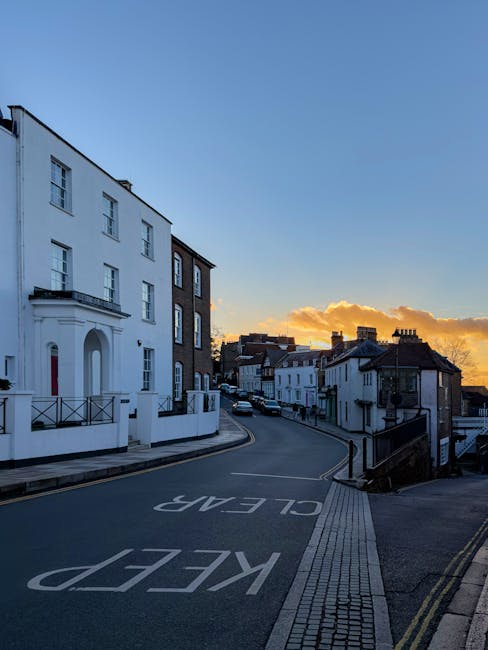
Best house removals Kingston KT1 narrow street access
Posted on 29/04/2026
Best house removals Kingston KT1 narrow street access: a practical local guide
Moving house in Kingston can feel straightforward on paper. Then you meet a tight one-way road, parked cars on both sides, a low arch, or that awkward turning circle that suddenly makes everything more interesting. If you are searching for the best house removals Kingston KT1 narrow street access, you are probably dealing with exactly that sort of move: a home that is perfectly normal to live in, but a little awkward for a removal lorry to reach. To be fair, that is more common than people expect in KT1.
This guide explains how narrow street removals actually work, what good movers do differently, and how to avoid the classic headaches: blocked access, delayed loading, damaged furniture, and the kind of last-minute stress nobody wants on moving day. You will also find practical tips, a comparison table, a checklist, and a realistic example so you can plan with a bit more confidence. If you are comparing services, you may also want to look at house removals in Kingston, man with van Kingston, and the wider services overview for a clearer picture of what each option covers.

Why Best house removals Kingston KT1 narrow street access Matters
Narrow street access changes almost everything about a house move. It affects parking, loading distance, vehicle choice, team size, timing, and even how your belongings should be packed. On a wide suburban road, the process is simple enough: the vehicle parks close to the property, the crew loads safely, and off you go. In a compact KT1 street, that neat plan can fall apart fast if nobody has checked access properly.
Kingston has a mix of busy residential streets, terraces, converted flats, riverside roads, and areas where on-street parking is already tight before a removal van arrives. Add school runs, delivery vehicles, and neighbours trying to get in and out, and you can see why access planning matters so much. A good removal team does not just turn up and hope for the best. They think ahead, and that makes all the difference.
It matters because poor access planning can cause:
- longer loading times
- extra carrying distance from van to front door
- higher risk of knocks and scrapes
- delays if the vehicle cannot stop nearby
- frustration for neighbours and road users
That is why the best local movers will ask detailed questions early. They will want to know about road width, parking restrictions, steps, entry codes, lifts, and whether a larger removal van can actually get close enough. If your home is a flat or maisonette, the flat removals Kingston service may be a more useful fit than a standard one-size-fits-all approach.
One thing people sometimes overlook is the emotional side. A move already has enough going on. When access is tricky, the small uncertainty can weigh on you more than it should. Getting the logistics right early brings a proper sense of relief. Simple, but true.
How Best house removals Kingston KT1 narrow street access Works
House removals for narrow streets are really a planning exercise with lifting and transport attached. The job normally begins long before moving day, when the moving company assesses the property details and decides what vehicle and crew will be needed. In practical terms, the process usually looks like this:
- Access review - you describe the road, nearby parking, road width, any height restrictions, and whether there is room for a van to wait legally.
- Move planning - the team decides whether a standard van, a smaller vehicle, or a shuttle-style approach makes most sense.
- Packing and preparation - items are boxed, labelled, and protected so they can be moved efficiently from a shorter or longer carry distance.
- Arrival and setup - the crew positions the vehicle as close as possible without causing problems for traffic or neighbours.
- Loading and transit - items are loaded in a safe order, often with heavier pieces first and fragile items kept secure.
- Delivery and placement - furniture and boxes are placed in the correct rooms at the new property, which saves time later. Very handy, that.
For awkward access jobs, the clever bit is not brute force. It is coordination. A removal company that understands tight streets will usually bring the right number of people, the right equipment, and the right expectations. If the property is a smaller home, a student move, or a lighter load, a man and a van Kingston arrangement can sometimes be a practical match. For larger family homes, a full removals Kingston service may be more suitable.
Truth be told, the difference often comes down to the first conversation. If a company asks the right questions, you are already in better hands.
Key Benefits and Practical Advantages
When the right team handles a narrow street move, the benefits are not just theoretical. They show up in small, practical ways throughout the day.
- Less waiting around - a well-planned move reduces dead time while the crew figures out where to park.
- Lower damage risk - shorter, safer carrying routes and proper protection help keep furniture intact.
- Better coordination - the crew can plan around access windows, traffic pinch points, and local restrictions.
- More predictable costs - efficient planning reduces the chance of unexpected delays and extra hours.
- Less stress for you - you are not trying to improvise on the day while boxes pile up in the hallway.
There is also a broader local benefit. In a place like Kingston, where some streets are busy, mixed-use, or already tight for parking, a considerate removals team helps the whole day go more smoothly for everyone nearby. That can mean a lot if you have neighbours who need access, or if you are moving in and out of a building with shared space.
If you are comparing providers, one useful thing to check is whether they have a clear approach to moving safety and protection. The information on insurance and safety is worth reading because it tells you how seriously a company treats the practical risks that come with awkward access, heavy furniture, and tight manoeuvring.
A small point, but an important one: a good move is often the one you hardly notice. No drama, no panic, no mysterious scuff on the banister. Just the work getting done.
Who This Is For and When It Makes Sense
This type of service makes sense for anyone whose property is not easy for a large van or lorry to reach. In Kingston KT1, that often includes terraced houses, older homes on narrower roads, flats above shops, and properties on streets where parking disappears quickly. It is also relevant if your road has a height barrier, a low bridge nearby, or a one-way system that limits vehicle positioning.
You will especially benefit if you are:
- moving from a terraced property with limited parking
- leaving a flat or maisonette with a narrow stairwell
- moving furniture from a road with heavy daytime traffic
- trying to avoid blocking a very busy street for too long
- moving on a schedule that leaves little room for delay
- handling bulky items such as wardrobes, sofas, or a piano
It also makes sense for people who want a more tailored moving plan rather than a generic quote. For example, if you only need a few key items moved and access is difficult, a removal van Kingston upon Thames option may be enough. If your move is more complex, you may need a fuller service with packing support, or even temporary storage through storage in Kingston.
Students moving into shared accommodation, first-time buyers arriving on a compact street, and families downsizing into a smaller property can all run into the same issue. The move itself is not unusual. The access is. That is the key difference.
Step-by-Step Guidance
If you want the move to go well, the job starts before the van does. Here is a practical way to handle it.
1. Check the street properly
Do not rely on memory alone. Walk the street if you can. Look at parking signs, turning space, speed bumps, and any places where the van might need to reverse. If you are not local yet, a quick video call or a few photos can be very helpful. Some streets look fine until you notice the parked cars and realise there is no easy place to stop.
2. Measure the awkward bits
Measure doorways, stair turns, hall widths, and any furniture that needs to pass through. A sofa that fits in your old house may still be a problem if the front path is tight and the corner is sharp. This is especially important for large wardrobes, beds, and anything fragile.
3. Tell the removal company the truth about the access
Not the polished version. The real version. If there is nowhere to park outside, say so. If the road is only passable for smaller vehicles, say that too. It is much better to over-explain than to find out on moving day that the team arrived with the wrong setup.
4. Book packing support if you need it
Good packing makes awkward access moves far easier because the crew can carry more safely and efficiently. Quality boxes, strong tape, and sensible labelling all matter. If you want help with materials and preparation, see packing and boxes Kingston. A well-packed move is usually faster. Not always glamorous, but it works.
5. Plan for a longer carry distance
If the van cannot stop right outside, the team may need to carry items further from the vehicle to the property. That changes the timing and the rhythm of the move. Clear paths, protected flooring, and organised staging areas inside the house help a lot.
6. Confirm arrival timing
Traffic, school runs, and parking pressure can all affect arrival. On narrow streets, it is often better to build in a bit of flexibility. Rushed loading and tight access do not mix well. They just don't.
7. Prepare the property at both ends
Make sure there is room for the crew to work indoors too. Hallways, stairwells, and entrances should be as clear as possible. A tidy route saves time and reduces the chance of knocks.
Expert Tips for Better Results
After many local moves, a few patterns become obvious. The good outcomes usually come from simple decisions made early.
- Choose the right vehicle size - bigger is not always better if the street is tight. A smaller van can actually be faster.
- Ask for a pre-move access check - even a quick review of photos can prevent a lot of guesswork.
- Label by room, not just by item - it speeds up unloading when access is fiddly and the team needs to work briskly.
- Reserve parking if needed - where possible, check what is allowed through the local authority or property management.
- Protect edges and floors - narrow hallways and stairs are where damage often happens.
- Keep essentials separate - documents, chargers, tea bags, medication, and a kettle. You will thank yourself later.
One more thing: if you have a difficult item like a piano or an oversized dining table, make sure the mover has specific experience with it. Dedicated services such as piano removals Kingston and furniture removals Kingston can be helpful because they show the company understands specialist handling, not just general lifting.
A small, slightly old-school tip: put a note on the front door with your name and the flat number if the building is tricky. It sounds basic, but it can stop a surprising amount of confusion. Little things, honestly, make the day easier.
Common Mistakes to Avoid
Most removal problems in narrow-access areas are preventable. Here are the mistakes people make most often.
- Underestimating the street width - people often say "it should be fine" when it is really a tight squeeze.
- Not mentioning parking restrictions - yellow lines, permit bays, and loading limits matter a lot.
- Booking the wrong service type - a full house move and a small flat move are not the same thing.
- Leaving packing too late - rushed boxing creates slower loading and more breakage risk.
- Ignoring stairs and internal bottlenecks - access problems are not only outside the house.
- Failing to check insurance - you should know what protection is in place before anyone lifts a sofa.
- Choosing on price alone - the cheapest quote can be expensive if the team is not set up for the job.
Another quiet mistake is assuming all local movers work the same way. They do not. Some are better suited to small van work, some to full house moves, and some to last-minute jobs. If time is tight, same day removals Kingston can be useful, but only if the access conditions and load size are realistic.
And yes, there is always that one box nobody labels properly. Somehow it contains the kettle. Every time.
Tools, Resources and Recommendations
You do not need a huge toolkit, but a few practical items make narrow-street moves far smoother.
- Furniture blankets and covers for corners, table legs, and polished surfaces
- Sturdy boxes that stack safely and do not collapse halfway down the stairwell
- Permanent markers and labels to mark rooms, breakables, and priority items
- Tape, stretch wrap, and mattress covers for protection in transit
- Gloves and proper footwear for anyone helping with lifting
- Phone photos of the road, entrance, and any obstacles for the moving team
As for useful resources, it helps to read the company's information pages before booking. For example, the pricing and quotes page can help you understand what to ask for, while the about us page can give you a better sense of the team's approach. If you are curious about the wider service mix, removal companies Kingston is also a sensible place to compare service styles.
If sustainability matters to you, ask about packing reuse, recycling, and disposal practices. Many people moving in Kingston appreciate a lower-waste approach, especially when there is already so much to think about. The page on recycling and sustainability is worth a look for that reason.
Law, Compliance, Standards and Best Practice
For a narrow street removal, the main compliance issue is usually parking, access, and safe working rather than anything highly technical. Still, the basics matter. Drivers should follow local parking restrictions and road rules, and the move should be organised in a way that does not put pedestrians, neighbours, or the team at unnecessary risk.
In the UK, good practice normally includes:
- safe lifting and handling methods
- appropriate vehicle loading
- clear communication about access limitations
- careful use of ramps, trolleys, and protective materials
- reasonable planning around parking and traffic conditions
You should also expect transparency on terms, payment, and complaint handling. Those pages are not exciting, I know, but they are useful. It is sensible to review terms and conditions, payment and security, and complaints procedure before you commit. If you want to understand how a business approaches responsibility and working standards more broadly, health and safety policy and modern slavery statement are good signals of a more established operator.
There is also a practical accessibility angle. Homes, paths, stairwells, and loading routes should be considered in a way that works for the people involved. If this is relevant to you, the accessibility statement gives another useful layer of reassurance.
Options, Methods and Comparison Table
Not every move in KT1 needs the same setup. The best choice depends on the size of your load, the street access, and how much help you want on the day.
| Option | Best for | Strengths | Limitations |
|---|---|---|---|
| Full house removals | Family homes, larger furniture loads, full household moves | Most complete service, more hands, better for heavier jobs | Can be more than you need for a small or very tight-access move |
| Man and van | Smaller loads, lighter moves, short-distance relocations | Flexible, often easier to position on narrow streets | Less suited to bulky, high-volume, or complex moves |
| Man with a van | Quick moves, few large items, local transport | Simple and practical for compact access areas | May need more trips if there is a lot to move |
| Specialist furniture or piano move | Heavy, valuable, or awkward items | Special handling and better protection for delicate objects | Usually more planning required |
In many Kingston KT1 moves, the sweet spot is somewhere between a full house removal and a smaller van-based solution. If your access is tight but your load is manageable, a more compact setup can actually be the smartest choice. Bigger is not always better. Not in a narrow street, anyway.
Case Study or Real-World Example
Imagine a three-bedroom terrace in KT1 with a narrow road, resident permit parking, and cars already lined up on both sides by mid-morning. The owners have a sofa, a dining table, two beds, and a dozen boxes of household items. A large lorry would struggle to stop safely outside. A smaller van can get closer, but only if it arrives at the right time and the route is cleared beforehand.
In a move like this, the most effective approach is usually:
- pre-move photos of the road and front entrance
- a smaller or mid-sized van rather than the largest available vehicle
- two or three crew members so items can be carried safely and steadily
- good floor protection and furniture covers
- priority packing for essentials so the family can unpack the first night quickly
The result? Less time spent waiting for parking space, fewer awkward manoeuvres, and a more predictable day. The family is not standing by the front door wondering where the van has gone. The crew knows the route. The move stays calm.
That calm matters. People often think removals are mainly about lifting. In reality, the best moves are usually about decisions made a few days earlier.
Practical Checklist
Use this checklist before moving day if your Kingston property has narrow street access.
- Confirm the exact address and any building access codes
- Take photos of the street, kerbside, entrance, and stairwell
- Measure large furniture and awkward corners
- Check parking restrictions and loading limitations
- Tell the mover if the street is one-way or particularly narrow
- Ask whether a smaller vehicle would be more suitable
- Prepare boxes, tape, labels, and protective materials
- Separate essentials you need on the first night
- Clear hallways, landings, and entrances at both properties
- Confirm payment, timings, and insurance details in advance
Expert summary: if the access is tight, the winning formula is simple planning, honest communication, and the right-size vehicle. That combination is usually better than trying to force a standard move into a street that clearly was not built for one. A bit of realism saves a lot of headache.
Conclusion
Finding the best house removals Kingston KT1 narrow street access is really about choosing a mover who understands the local reality: limited parking, compact roads, awkward turns, and the need to work safely without turning the street into a bottleneck. When the team plans properly, narrow access stops being a problem and becomes just another detail to manage.
The key is to be honest about the property, ask sensible questions, and choose a service that fits the size and complexity of your move. If you want a smoother experience, start early, share photos, and make sure the company knows exactly what they are walking into. It's simple advice, but it saves people all the time.
Get a free quote today and see how much you can save.
If you are ready to move, take a calm, practical approach and choose a team that treats access planning as seriously as the loading itself. That is where a good move begins - and usually where a better day starts too.